Showing posts with label martin luther king jnr. Show all posts

Thursday, 9 January 2014

Mark Duggan verdict: We either fight the good fight or our children die.

Wednesday was a cold wet windy day in London, it was the kind of day where people scuttle hurriedly with purpose, through shimmering grey damped streets. A day when peoples coats were hermetically sealed around them, when the wind whipped by in sudden squalls. Just another day in London city.

This was no ordinary winter’s day however.  England, had what I would call its ‘Rodney King’ moment as we witnessed the conclusion of a three month inquiry into the shooting of Mark Duggan by Operation Trident Metropolitan Police Officers.

An inquest jury considered whether the 29-year-old Tottenham father was lawfully or unlawfully killed when he was shot dead in Ferry Lane, Tottenham Hale, on August 4, 2011.  

The jury sat through three months of evidence and pondered for five long tense days, punctuated by the Christmas break, and considered whether Mark Duggan a 29-year-old Tottenham father was lawfully or unlawfully killed when he was shot dead in Ferry Lane, Tottenham Hale, on August 4, 2011.

No ordinary day January 8th will be remembered as the day when yet again British justice failed a black community.


The 10-strong jury of three men and seven women delivered a confused verdict that many people have simply failed to understand.

They concluded that there was no case to answer and despite what the inquest coroner Judge Cutler called ‘stark inconsistencies’ in police evidence, they concluded Mark Duggan had not had a gun in his hand when he left that fateful mini cab after being subject to a ‘hard stop’ by the London anti-gang unit Trident, they decided despite this Mark Duggan had been ‘lawfully killed ‘
When the decision was announced all hell broke loose as the pent up anger, frustration, tension, grief and sadness spilled both inside and out of the Royal Courts of Justice.
There were huge discrepancies in the police version of events Judge Keith Cutler made a point of highlighting these stark inconsistencies’ during his summing up of the at 12-week hearing at the Royal Courts of Justice in December last year .
He pointed out that the evidence of a Met Police Sergeant who was the operational firearms commander and tactical advisor in Duggan’s arrest team appeared to be “directing officers to go and secure a gun which hadn’t yet been found”.
In statements made in the aftermath of the shooting, the same officer said he had asked another officer, to look for the gun. However this was undermined by other evidence, from three armed PCs who arrived on scene shortly after the shooting of Mark Duggan. All, including the supervising Sergeant, later gave statements saying another senior officer directed them to the gun and instructed them to secure it.
However in damming evidence seen by the jury, a witness’s video footage clearly shows the gun being found only after the three PCs first speak to the Sergeant. At the time of Marks death many suspected the Metropolitan police had in fact planted the gun at the scene to justify his shooting. This evidence gives those views further credence.
However without this crucial video evidence the Jury would have no doubt simply accepted the Police version of events as the truth. The fact is Police officers involved lied.
This verdict also signals the death of Operation Trident a subject I have written extensively, you can read more here . The fact is that the credibility Operation Trident used to enjoy has long gone and the unit should now simply be disbanded. Its reputation has become toxic as a result Mark Duggan’s killing .
Judge Cutler told the jury during his summing in December that “Without that BBC footage that would have been completely accepted and we would not be talking about it,” “Everyone might have felt quite secure about that account if it hadn’t been for Witness B. He added “It is not a question of anybody being mistaken. It is something which is a direct contradiction here; there is that stark problem.”
More than one officer s told the inquest that they had found the gun. Judge Cutler said: “There’s a lot of people finding the gun but not telling anybody else about it.”
The suggestion that Mark Duggan threw the gun into some nearby bushes is inexplicable and irrational. All eleven officers who gave evidence never saw Duggan dispose of the gun, there was no forensic evidence to support his association with the gun, none of the independent witnesses saw him throw a gun and yet a weapon was found some 20 feet away and without a shred of evidence the jury concluded that Duggan had somehow disposed of the gun prior to his arrest.
Judge Cutler also reminded jurors that while tests showed it was possible to throw the gun into the bushes from where Mr Duggan was shot, one medical expert had told them he would have needed “great willpower” to do so having just been shot in that arm, and that the theory didn’t really tie in with witnesses’ accounts.
In 2011 the reaction to the shooting of Mark Duggan was to spark disturbances right across the country as anger against the police exploded onto the streets. Of course there were those criminal element who were intent on looting and looting alone.

However the Guardian’s Reading the Riots report explained that the simplistic dismissal of the events of August 1th 2011 as simply criminally motivated as described by the Prime Minister David Cameron is factually wrong. This deep alienation born of police harassment and economic exclusion provides the rational for the tragic events that unfolded
Their report pointed to the widespread anger and dissatisfaction of many young people with the roughhouse policing including stop and search, a basic lack of respect from officers.
 It’s reputation has become toxic as a result and mirrors the on-going reputational decline of the Metropolitan Police Service.
There is a link between these contemporary issues and black people’s historical experience of oppression. As a result we are hyper sensitive to the treatment of black people at the hands of statutory authorities be it the police, schools or mental health institutions. Our history is replete with a constant stream of injustice and tragedy. Our deepest fears, generated by our own history is to die brutally at the hands of the police. Our latent fear is informed by our experiencing of lynching, racist murders and police brutality. 
You see some us believe that we have never had any real acknowledgement,  apology or reparations for slavery that such things could happen again
Deaths in police custody represents the critical fault line in the relations between police and black communities. The fact is these controversial deaths have increased in recent years in London rising from four deaths in 2008 to sixteen in 2012, according to figures published by the Metropolitan Police.
This palpable fear and anger is not well understood by some white people who don’t understand the cultural symbolism of such events. The very people who are charged with protecting our communities become feared as a violent oppressive force of occupation.

Institutional racism has become rampant and endemic as a result of a changes in the political environment. Since the Coalition and Government came to power the restraining influence of a series of monitoring policy frameworks and the political priority accorded to race equality has been swept away and as a result the police have returned to their natural cultural default setting of open hostility to black people.
The Home Secretary, the  Mayor Boris Johnson and Commissioner Hogan Howe must stop denying the reality of institutional racism that leads to so many black people being criminalised and disproportionately abused, attacked and beaten by police officers steeped in a culture of racism. The elite armed response unit SO19 is no different in this regard to Police Constables who routinely discriminate against black people on a daily basis as evidenced by stop and search figures and disproportionate charging rates for black and white first time offenders.
I believe that too many Police officers see black people differently to whites and racial bias leads them to assume a threat where non exits. We are routinely considered to be criminals, psychotics, super bad bordering on evil.
This racial bias of specialist firearms officers leads to a false perception of increased threat, which in turn leads to the use of overwhelming force being used by frightened police officers.
That’s why black people suffer more violent rates of arrests, are more likely to be tasered by the police and sometimes face overwhelming and deadly force.
In a multicultural city like London a majority white police service should routinely test officers for levels of racial bias and specifically assess whether racist attitudes or unconscious bias leads to perceptions of increased threat when the subject is black.
Politicians of all parties must now accept or be forced to confront the real and growing crisis of confidence that exists between black communities and the Metropolitan Police.
The Association of Chief Police Officer’s and the Home Secretary must also  accept that there is an urgent need to restore the confidence of black communities in British policing or we can expect further disturbance in the future.
No dialogue aimed at improving trust and confidence and building community police partnerships can be effective, or have any credibility if the reality of institutionalised racism is not accepted by Government and the Mayor Boris Johnson. That should be our key starting point for any discussions. Such is the depth of the crisis and the level of political resistance to reinstating institutional racism as a key priority that nothing short of a national boycott on working with the police stands a chance of changing things for the better. A 12 month boycott on all but essential discussion and an all-out national boycott on black police recruitment will bring all parties to the negotiating table. Anything else is simply window dressing and waiting for the next crisis. It’s time to take a stand.
 Unfortunately both police and politicians deny the existence of endemic institutional racism and until the political discomfort and pain of holding that position becomes so great as to become intolerable, then they will not change their ideological Tory view that racism is nothing more than ‘politically correctness gone mad’ or plain old ‘Marxist lunacy’
That political blind spot cost the country hundreds of millions of pounds as a consequence of the disturbances of 201, all of which could have been avoided if the lessons learned after the racist murder of Stephen Lawrence were applied. Instead they were swept away by Tories and senior police officers whose political antagonism to anti-racism became so engrained that some would physically wretch at the mention of the very words ‘anti-racism’ or ‘multiculturalism’.
Government and the Mayor need to reprioritise the issue of racism in policing as an urgent issue if we are to avoid a further descent into deep seated animosity and a Northern Ireland type policing scenario. I can see, in a few years’ time, if this issue is not urgently addressed quickly how Police could find themselves being actively targeted as the ‘enemy’ and subject to violent and deadly retribution. It’s simply not a road we can afford to go down. We’re not there yet but we’re perilously close if someone does not wake up and smell the coffee.
Challenges don’t exist for the Police and politicians alone. The Independent Police Complaints Commission must now begin the process of restoring its reputation after it became clear that they had colluded with the Metropolitan Police in putting out misinformation, in the immediate wake of the shooting, suggesting Mark had shot at police officers. This turned out to be a lie.
Whilst the jury perverse verdict leaves everybody angry and confused, the reality is, that real world public perception, particularly within black communities is that the ‘police executed Mark Duggan’.
My community is seething with resentment and in danger of exploding with anger at the ongoing continued mass criminalisation, harassment and violence they receive at the hand of the police.
Racial profiling, stop and search, racist police officers and a criminal justice system that reeks of institutional racism and injustice provide the fuel for this profound discontentment.
 It’s time we returned to the anti-racist battlefield to secure the future for our children.

We at Colourful Radio  believe that this is an extremely important issue for our communities and as such I would like to invite you listen and join in my live breakfast show on Friday 10th January between 7 and 10 am.  

As you know these issue rarely get the proper coverage from mainstream news outlets and in response to that we have decided that our entire programme will be dedicated to this important issue.  We need you support to make sure the programme is a resounding success.

So this week on my show we will be focusing exclusively on deaths in custody, the implications of the Mark Duggan inquest verdict for the entirety of the programme. 

I will be joined in the studio by my co presenter Dr X and by Matilda Macattram of Black Mental Health UK, Samanath Rigg sister of Sean Rigg Janet Hills Chair of Met Black police Association, Hillsborough Justice Campaign, Peter Herbert Chair of Society of Black lawyers .Deborah Coles from Inquest , Assistant Commissioner Rowley of the Met Police and many many more. 

Stop Press: The Mark Duggan family have called for a peaceful mass demonstration Saturday 11th Jan 2pm Tottenham Police Station. 

www.colourfulradio.com


Monday, 14 January 2013

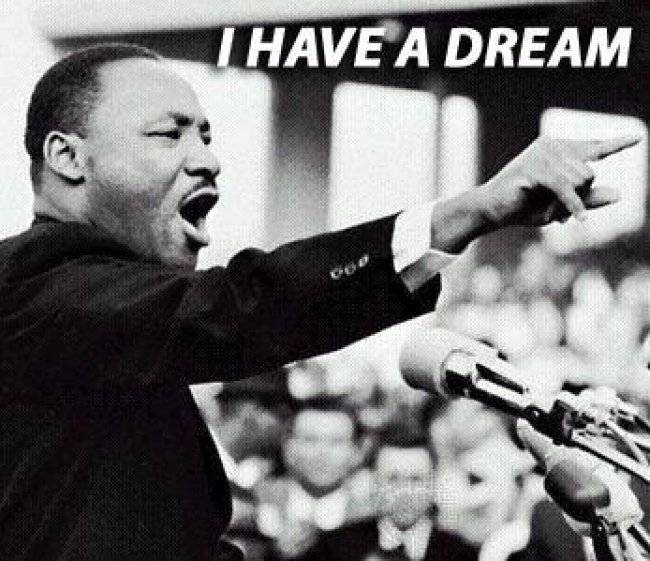
Martin Luther King's Speech: 'I Have a Dream'


I am happy to join with you today in what will go down in history as the greatest demonstration for freedom in the history of our nation.

Five score years ago, a great American, in whose symbolic shadow we stand signed the Emancipation Proclamation. This momentous decree came as a great beacon light of hope to millions of Negro slaves who had been seared in the flames of withering injustice. It came as a joyous daybreak to end the long night of captivity.

But one hundred years later, we must face the tragic fact that the Negro is still not free. One hundred years later, the life of the Negro is still sadly crippled by the manacles of segregation and the chains of discrimination. One hundred years later, the Negro lives on a lonely island of poverty in the midst of a vast ocean of material prosperity. One hundred years later, the Negro is still languishing in the corners of American society and finds himself an exile in his own land. So we have come here today to dramatize an appalling condition.

In a sense we have come to our nation's capital to cash a check. When the architects of our republic wrote the magnificent words of the Constitution and the Declaration of Independence, they were signing a promissory note to which every American was to fall heir. This note was a promise that all men would be guaranteed the inalienable rights of life, liberty, and the pursuit of happiness.
 It is obvious today that America has defaulted on this promissory note insofar as her citizens of color are concerned. Instead of honoring this sacred obligation, America has given the Negro people a bad check which has come back marked "insufficient funds." But we refuse to believe that the bank of justice is bankrupt. We refuse to believe that there are insufficient funds in the great vaults of opportunity of this nation. So we have come to cash this check -- a check that will give us upon demand the riches of freedom and the security of justice. We have also come to this hallowed spot to remind America of the fierce urgency of now. This is no time to engage in the luxury of cooling off or to take the tranquilizing drug of gradualism.
Now is the time to rise from the dark and desolate valley of segregation to the sunlit path of racial justice. Now is the time to open the doors of opportunity to all of God's children. Now is the time to lift our nation from the quicksands of racial injustice to the solid rock of brotherhood.

It would be fatal for the nation to overlook the urgency of the moment and to underestimate the determination of the Negro. This sweltering summer of the Negro's legitimate discontent will not pass until there is an invigorating autumn of freedom and equality. Nineteen sixty-three is not an end, but a beginning.

Those who hope that the Negro needed to blow off steam and will now be content will have a rude awakening if the nation returns to business as usual. There will be neither rest nor tranquility in America until the Negro is granted his citizenship rights. The whirlwinds of revolt will continue to shake the foundations of our nation until the bright day of justice emerges.

But there is something that I must say to my people who stand on the warm threshold which leads into the palace of justice. In the process of gaining our rightful place we must not be guilty of wrongful deeds. Let us not seek to satisfy our thirst for freedom by drinking from the cup of bitterness and hatred.

We must forever conduct our struggle on the high plane of dignity and discipline. We must not allow our creative protest to degenerate into physical violence. Again and again we must rise to the majestic heights of meeting physical force with soul force. The marvelous new militancy which has engulfed the Negro community must not lead us to distrust of all white people, for many of our white brothers, as evidenced by their presence here today, have come to realize that their destiny is tied up with our destiny and their freedom is inextricably bound to our freedom. We cannot walk alone.

And as we walk, we must make the pledge that we shall march ahead. We cannot turn back. There are those who are asking the devotees of civil rights, "When will you be satisfied?" We can never be satisfied as long as our bodies, heavy with the fatigue of travel, cannot gain lodging in the motels of the highways and the hotels of the cities. We cannot be satisfied as long as the Negro's basic mobility is from a smaller ghetto to a larger one. We can never be satisfied as long as a Negro in Mississippi cannot vote and a Negro in New York believes he has nothing for which to vote. No, no, we are not satisfied, and we will not be satisfied until justice rolls down like waters and righteousness like a mighty stream.
I am not unmindful that some of you have come here out of great trials and tribulations. Some of you have come fresh from narrow cells. Some of you have come from areas where your quest for freedom left you battered by the storms of persecution and staggered by the winds of police brutality. You have been the veterans of creative suffering. Continue to work with the faith that unearned suffering is redemptive.

Go back to Mississippi, go back to Alabama, go back to Georgia, go back to Louisiana, go back to the slums and ghettos of our northern cities, knowing that somehow this situation can and will be changed. Let us not wallow in the valley of despair.

I say to you today, my friends, that in spite of the difficulties and frustrations of the moment, I still have a dream. It is a dream deeply rooted in the American dream.

I have a dream that one day this nation will rise up and live out the true meaning of its creed: "We hold these truths to be self-evident: that all men are created equal."

I have a dream that one day on the red hills of Georgia the sons of former slaves and the sons of former slave owners will be able to sit down together at a table of brotherhood.

I have a dream that one day even the state of Mississippi, a desert state, sweltering with the heat of injustice and oppression, will be transformed into an oasis of freedom and justice.

I have a dream that my four children will one day live in a nation where they will not be judged by the color of their skin but by the content of their character.

I have a dream today.

I have a dream that one day the state of Alabama, whose governor's lips are presently dripping with the words of interposition and nullification, will be transformed into a situation where little black boys and black girls will be able to join hands with little white boys and white girls and walk together as sisters and brothers.

I have a dream today.

I have a dream that one day every valley shall be exalted, every hill and mountain shall be made low, the rough places will be made plain, and the crooked places will be made straight, and the glory of the Lord shall be revealed, and all flesh shall see it together.

This is our hope. This is the faith with which I return to the South. With this faith we will be able to hew out of the mountain of despair a stone of hope. With this faith we will be able to transform the jangling discords of our nation into a beautiful symphony of brotherhood. With this faith we will be able to work together, to pray together, to struggle together, to go to jail together, to stand up for freedom together, knowing that we will be free one day.

This will be the day when all of God's children will be able to sing with a new meaning, "My country, 'tis of thee, sweet land of liberty, of thee I sing. Land where my fathers died, land of the pilgrim's pride, from every mountainside, let freedom ring."

Dr Martin Luther King: Have we achieved the dream of race equality in Britain?

January 15th is the birthday of one of the most celebrated human rights icons the world has ever seen, activist, academic, politician, and Christian religious leader, Dr Martin Luther King.  His commitment and activism in the cause of justice remains an inspiration to billions of people across the globe.
Today in the United States and celebrated across the world people will be remembering that most unique gift of love and justice, bequeathed to the world by African Americans who led the struggle for race equality in Jim Crow apartheid America.
That unique gift, paid for by the blood of many who were brutally murdered, many in acts of bravery and self-sacrifice, seeded the struggle for civil rights and justice across the world.
The US civil rights struggle has, over time, became the moral standard against which all subsequent struggles for freedom and justice are judged. From Native American Indians to the sweltering heat of the Barrios, to the raw visceral struggle of the Palestinian people against the apartheid of Israel, Dr King and the international song of freedom “We Shall Overcome” resounds from the mouths of the oppressed everywhere.
For Dr King, the struggle against racism could not be divorced from the struggle for economic justice. In the later years of his short life, he began to make the connections between racism, poverty, and war, social and economic injustice at home, in the US and throughout the world.
It is without doubt that the US civil rights struggle and Dr King in particular made an invaluable and enduring contribution to the cause of international human rights, peace and justice.

MLK50: Equality in Our Lifetime.

 August 28th 1963 saw the largest civil rights demonstration ever in American political history. The iconic March on Washington for Jobs and Justice led by Dr Martin Luther King saw the consolidation of what became a global campaign against American Jim Crow segregation and racism take shape. It was on the steps of the Lincoln Memorial that Dr King delivered what is now considered to be one of the greatest public articulations of human rights of all time, known today as Dr King’s “I have a dream” speech.
That world famous speech came to epitomise a vision of a world where skin colour matters less than the colour of your eyes. A heady intoxicating vision of a world where racism is confined to the murky dustbins of history.
Who could not be moved by the prophetic Christian radicalism of Dr King’s speech? That dream, of a post racist world, continues to this day and Dr King became a global icon for human rights, peace and justice. The speech is as powerful today as it was in 1963. This year, 2013, is the 50th anniversary of that most momentous event in history.
In honour of this historic occasion, Black Activists Against Cuts (BARAC) UK has planned to make 2013 a year of celebration, reflection, and opportunity to assess just how far the vision of Dr King’s dream of a world without racism is a reality today. In remembrance of that historic occasion, we have declared 2013 the year of MLK50: Equality In Our Lifetime providing an opportunity for a national conversation about the state of race equality in Britain.
On 21st January 2013 we will be launching the year long celebration and campaign on this important theme on Dr Martin Luther King Day at 7pm at the House of Commons, Portcullis House Victoria Embankment in the Betty Boothroyd Room.
We here in the UK are at a critical stage of our struggle for equality and justice. The harsh economic effects of austerity have led to a serious increase in the economic effects of racism on black communities.
Unemployment, poverty, economic exclusion, racism in the workplace, racism in sport, racial attacks, stop and search, deaths in police  custody are all on the increase threatening to consign future generations to a Britain where the debilitating effects of racism will be much worse than it is today.
That reality ultimately leads us to the critical and in some sense perpetual question that defined the US struggle for civil rights, how long? How long will it take to achieve the goal of true race equality in the UK?

Race equality in Britain today.

In 2010, Operation Black Vote organized a huge election rally “Black Britain Decides”, where for the first time all major political figures from all the major parties attended. The rally made history, never before had an election rally been held for Black communities that had been accorded such importance by all the political parties.

The event broke new ground and the assembled audience was addressed by a phalanx of some of the biggest names in British politics all of whom were unsurprisingly evangelical about race equality.
With over 1500 people in attendance, this was the largest election hustings in the UK during the 2010 general election. The prospect of a tight election in the offing resulted in mainstream parties,  who historically dispatch minor political figures to such events, lining up some of their biggest hitters to attend in order to court the black vote.

Deputy Prime Minister Nick Clegg told the meeting of his personal commitment to prioritising race equality both within Government and the Liberal Democratic Party. He said:
“I want this election to mark the beginning by real change in Britain I don’t want to live in a society where a child’s life fortunes are still determined by the circumstances of their birth, where if you’re from an ethnic minority you’re still more likely to be out of work, more likely to be on low pay, more likely to be hassled by the police when you haven’t done anything wrong.”
He outlined three policy initiatives that he pledged to deliver in Government:

1.    An extra £2.5 billion spending on tackling disadvantage in schools.

2.     A crack down on race discrimination in the workplace through the introduction of blind job applications and statutory pay audits.

3.    End the systematic abuse of civil rights by;

ending the harvesting of black men’s DNA on the national DNA database; reforming Counter Terrorism legislation that place entire communities under suspicion.
Vince Cable told the meeting that having a Dad who was, I quote 'a white supremacist' and eventually marrying an Asian woman in the early 1970s and being the father in a ‘mixed race’ family, he was personally committed to tackling racism and discrimination. He lamented, as did Clegg, the failure and the stunning lack of progress made by his party on ensuring black representation. He said:
“I know there are still problems the worst thing I could possible do here is to be complacent, there are still problems, there is still discrimination which prevent people fulfilling their potential but my background gives me a sense of hope that we can deal with these problems”.
He went on;
“I want in conclusion to affirm my belief that we can overcome prejudice and discrimination and want to make it absolutely clear that I commit my party to that end and to make sure we’re properly represented with you as a part of it.”
Both Clegg and Cable committed to leading the debate about tackling racism in Government.
Tory George Osborne followed and told the meeting that both he and Cameron and his party were implacable opponents of racism and in Government  he would be focused on removing the last remaining barriers of discrimination faced by black Britons.

He said;
“I think we can all agree on this: we have become a county that is fairer, more equal, more tolerant, less prejudiced and we should all be proud of that progress but while we have come a long way there still is a distance left to travel. Immense barriers remain; the question is how do we bring about that change?”
He added;
“Well first of all I believe we need a full frontal assault on the remaining discrimination and prejudice. It will not be tolerated by Conservative Government and we want every child, irrespective of their background or the colour of their skin to have the best possible chance in life and  there is a powerful leadership role that political parties could and should play.”
Fine words designed to entice black communities into believing that both the Tory and Lib Dems understood the black condition and were determined to tackle race discrimination
A lot has happened since that hustings. In 2013 and as part of the MLK50: Equality in Our Lifetime campaign we want to now assess what progress has been made and where we go from here.
Race has been dumped off the Government’s political agenda.
The Coalition Government has a stated committment to achieving the goal of an equal society, where all citizens, regardless of race or faith enjoy equal rights and protection against unfair discrimination under the law.
The Government’s Equality Strategy was published in December 2010.  Home Secretary Theresa May wrote in the forword,
“Equality is at the heart of this Coalition Government. It is fundamental to building a strong economy and a fair society; and in these difficult economic times equality is even more important. As we rebuild our economy, it is essential that we make sure we benefit from the talents of everyone in the UK. As we take the difficult decisions necessary to tackle the UK’s record deficit we are determined to do so fairly, protecting the most vulnerable and prioritising equal opportunities for all”.
In the concluding section the Government states:
“We will put equality at the heart of government, ensuring that we lead by example, embed equalities across all departments and work in partnership with business, community groups and wider society to deliver tangible results.”
The Coalition’s recent publication of their “midterm review” was an opportunity to assess, to what extent Cameron and Clegg had delivered on their key election promises and their Equality Strategy.
It’s important to ask the question whether this Government is meeting the needs of Britain’s increasingly diverse citizenship.  What is immediately noticeable is the fact that the specific issue of race equality is noticeable by its absence. More generally, on equalities, however the Government had this to say;

“Every citizen has the right to be treated with dignity and respect and to full equality under the law. Over the years huge advances have been made in protecting people against discrimination on grounds of race, religion, sexual orientation, disability or age. This Government is determined to continue that progress.”
The warm words of Cameron and Clegg gave way to the harsh and cold reality over the next two years. Contrast these words with the stark reality of this Coalition Government that has embarked on an ideological attack on the concept of multiculturalism and anti-racism.

2010 Budget

Chancellor Osborne’s October 2010 budget failed to meet the requirements of the Equalities Act. This was despite their apparent commitment to race equality when it came to the first big policy test.
Osborne, Clegg and Cable simply ignored the legislation that required them to produce an equality impact assessment identifying the potential for racial discrimination within their budget proposals. As a result of massive public sector cuts we have seen rates of racial inequality increase. Both adult and youth employment have seen huge increases as a result.
Black women and young people felt the initial brunt of spiralling rates of unemployment compounded with an increase in University fees and the ending of the Education Maintenance Allowance (EMA). As a result we have seen an increase in rates of poverty, unemployment and indebtedness. For a community where race discrimination had resulted in profound economic and political marginalisation and that was disproportionately affected by racism prior to the economic crash, austerity has simply magnified the intensity of racism and its effects.
 

Legal redress against discrimination.

The Equality and Human Rights Commission (EHRC) under the disastrous leadership of Trevor Phillips refused to prosecute the Government despite launching an inquiry which confirmed that the Government had deliberately and in a calculated way ignored the law of the land. Much good, this spineless act of political cowardice did for the Commission. In subsequent years, they saw their budget slashed, and late last year the Government removed the only active black commissioners.
Trevor Phillips
The EHRC is now utterly ineffective as a statutory regulator and the subsequent ethnic cleansing of Commissioners along with the appointment of a Tory crony as chair will see its eventual demise.
In effect, this leaves Britain’s black communities with very little recourse to statutory protection against racism in law. Failure of the EHRC, closure of local race equality councils, cuts to legal services such as Citizen Advice Bureaus and advice centres means that in effect, there is now no nationally accessible or affordable legal avenue for black people to challenge racism in Britain.
 Welfare reforms will also see thousands of black people targeted as part of the cuts programme. Housing benefit reforms have seen thousands of black families being forced to move as the Government attempts to reclaim the inner cities for the rich whilst pushing out both poor and black communities. Whilst refusing to tackle racism in recruitment black people will be doubly punished as they suffer the consequences of being demonised for being unemployed and then demonised for being poor.
 

Stephen Lawrence Macpherson Report.
 
The Coalition Government’s real agenda, apparent to all today, was to reverse the gains made on race equality as a result of the seminal Stephen Lawrence report.
Over the last two years, Cameron, Clegg, Osborne and Cable dismantled the entire post Macpherson policy reporting forums and task forces set up to drive the implementation of the recommendations across Government. Alongside their cavalier disregard of the Equality Act the message that went out to Government departments, statutory agencies and local government was clear and unambiguous: “We don’t care about race equality”.
Unbelievably there is no real national policy consultation with black communities. The Coalition Government abolished a dedicated funding stream for work on race equality and dismissed all the black and ethnic minority organisations from a race equality policy forum. In addition, the Government also issued guidance to departments and local government that specific funding for distinct ethnic or cultural groups was encouraging separatism, bringing to an end targeted funding for deprived ethnic groups. The mere mention of the word racism today is seen as divisive.
Racist and religious attacks are increasing and history teaches us that periods of economic decline always see an increase in racism. As this economic crisis deepens so the re-emergence of racism is blindingly obvious.
Suspicious deaths of black men in police custody saw a massive increase throughout 2010 – 2011 alongside large increases in the rates of stop and search andthe riots that took place in August 2011 means we have seen black community police relations significantly deteriorate. The result of post-riot policing has seen huge increases in the number of black youth now in British jails. We have more black young people in jail than in university.
Despite some progress in recruiting black officers to the police service we have seen those gains reversed as more black officers leave the force than join. That’s a net loss of black officers as a result of racism, and cuts to the policing budgets halting recruitment.
Institutional racism within the Criminal Justice system is now unleashed as a result of the ideological opposition of the current Government to the principle of race equality.
 Both Doreen Lawrence and her son  Stuart Lawrence have publically condemned this Government’s vacuous commitment to race equality and these comments reflect the growing anger in black communities.
The rise of racism in football both on the terraces and on the pitch has shocked the nation. Whatever the public reaction the failed prosecution, by the Crown Prosecution Service, of Chelsea player John Terry illustrates the growing normalisation of racism within society at large and in the judiciary in particular. The legal definition of racist abuse now depends entirely on context.

Scapegoating

The cuts to Britain’s budget have also led to economic tensions that are being exploited by this Government which is engaged in highlighting the issue of immigration as a means of distracting the public from targeting those responsible for the economic crisis: the bankers.
We can expect increasing attacks on black communities by the media and right wing politicians. Whether through the prism of “terrorism or criminality” the hijab or the hoodie: both will become demonised as the economic crisis continues to deepen.
The racist English Defence League’s violent demonisation of Islam is another illustration of increased rates of racism and religious bigotry.
EDL: fascists and racists


Conclusion

This Government has launched an economic war on working class communities and black communities in particular.
We are in danger of bequeathing to our children a society where racism is much worse than the society bequeathed to us by the Windrush generation.
They fought and sacrificed themselves in the spirit of Dr King to secure the future for their children and future generations.
We are in real danger of enduring a decade of increased rates of racism that will force future generations of black young people to decades of struggle against racism instead of achieving their innate potential.
That is why we are launching this important campaign.
The once mighty and radical black voluntary sector has been decimated and brought to its knees. The black church remains powerful but lacks coherence and clear leadership. The Trade Unions focus their efforts in fighting cuts and combating the extreme right wing rather than fighting institutional racism. The EHRC has lost its way and has become a fig leaf for Government racism. Racism is on the increase and economic injustice prevails everywhere as the Government punishes the poor and rewards the rich.
It’s time to make a change and commit ourselves to a course of action that can secure the future of our children. We posed a question at the beginning of this article asking how long before we achieve race equality in the UK?
The answer may surprise many analysing the rate of progress achieved over the last 50 years here in the UK and taking into account the current Government’s disastrous economic policy on black communities it will be 2513 before Dr King’s dream becomes a reality.
Now the real question to all concerned with race equality in Britain is can we wait that long? If not how do we achieve race equality in our lifetime? Come and join us as we assess our options and discuss what can be done to save the future of our communities.


Lee Jasper