
 |
| Boris Johnson: race equality is not important in his world |
London is the most ethnically and religiously diverse city on the face of the planet. As we prepare to welcome people from all over the world to the London Olympics they will be greeted by a city that is a vision of the future.
London is the world in one city and visitors can expect to find communities, food, and religious beliefs representing the four corners of the globe. In an increasingly globalised world more major cities will begin to look increasingly like London.

That hyper racial and cultural diversity so readily apparent on the meandering streets of London, so resplendent in its dynamic multiculturalism that helped London win the 2012 Olympic Games, fascinates and beguiles peoples coming from drab monocultural societies. This multicultureality is part of London’s distinct charm and appeal.
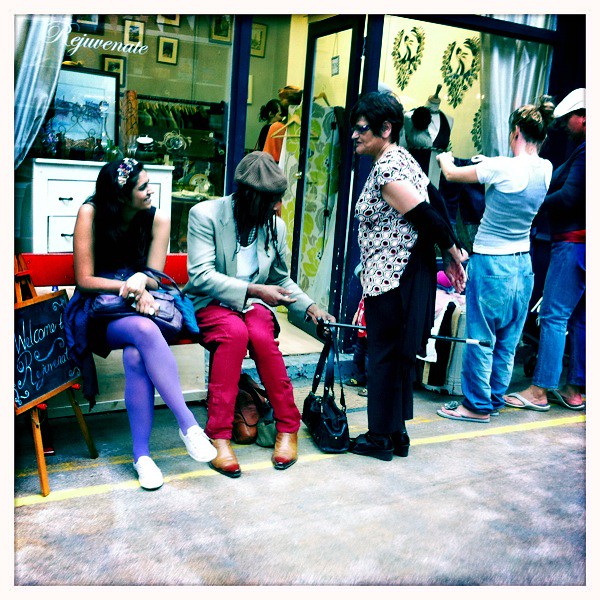
However that most remarkable smiling cultural dynamism seen on London’s streets and markets instantly disappears once you enter the po-faced, formal and stiff neo Victorian world of the City of London. Nowhere is this contrast sharper than in the areas of the financial service sector and London governance.
Here we enter the almost culturally exclusive world of wealthy white men where diversity is looked upon as exceptional, where those therein look more like the Britain of the 1950’s: old male pale and stale.

As anxiety around the country about the state of our economy grows with every passing day and the Euro zone threatens to end the world as we know it, the media reports schizophrenically and simultaneously on the continuing economic crisis, the Queens Jubilee, Euro Championships, Wimbledon and now the London 2012 Olympics.
Whilst the diversity reflected on the streets of London, will be also be reflected within the national Olympic athletes teams, by the spectators from around the world, once one enters the City of London and London governance that diversity instantly vanishes.
London’s commitment to equality and diversity in employment and politics is revealed as mere tokenistic window dressing.
The Mayors Office, the London Assembly, the City of London Corporation, London Government Association, Local Councils and the halls of high finance in the city, resemble a racial hierarchy, a cultural exclusiveness, an ‘old boys’ club that is resolutely white and male.
In a city like London these circumstances are a recipe for disaster and discord. Such huge racial divides and the distinct lack of diversity in the corridors of power and influence pose a serious threat to the city.
African, Caribbean and Asian descendant communities amongst an international cohort of refugee and asylum seeker communities are growing in number and are becoming deeply alienated by the huge racial disparities in terms of their reducing life chances and dearth of opportunities.
There is a huge and growing difference between wealthy white London and the majority multicultural impoverished London. This is a city divided by deep economic, structural racial disparities that are becoming more entrenched as the economic crisis continues.
The Olympics, we are told by the Prime Minister David Cameron, will bring £30m billion into the London economy. I can confidently predict that London’s Black and Muslim communities will not benefit from the huge injection of cash. Trickle down economics never ever reached these communities in the boom times. The word in the black community is that in economic terms we are all black now as people who have enjoyed years of white privilege in the city are introduced to the black experience of increasing rates of unemployment and poverty.
As the media focuses on the issue of the continuing financial scandals of the Square Mile, across inner city London the hot smoldering embers of economic and social injustice burn bright.
We saw these embers ignite as the issue of deaths in police custody and an acute sense of injustice acted as the spark that promoted the riotous disturbances of August 2011. This profound crisis and the reality of a deeply divided city remain largely ignored. The mass of black and poor people in London have been left to fester and ferment.
The media and press, whose pressrooms rarely include any black journalists and whose limited understanding of racism is derived from their own superficial experiences and infects their perspective on race issues, news stories and editorials results in distinct racial bias in news reporting.
How many black reporters senior or otherwise are there at the main media companies such as the London Evening Standard or LBC Radio?
This lack of diversity in the media finds its mirror image in London’s Mayoralty. After 8 years the Mayor Boris Johnsons team of senior advisors does not reflect London. This results in serious policy weaknesses that relegates the political priority accorded to racial equality policy.
Compounded by the ideological Tory mantra that refuses to recognise difference and racial disadvantage in terms of policy I see the consequences as tensions continue to build.
Policing is a good example of the fundamental political weakness that sits at the heart of London governance. The Mayor of London Boris Johnson has radically transformed the notion of Police accountability in the Metropolitan Police Service.
The MPS is the largest police organisation in England and Wales, and has a leading role in national and international policing. It has a workforce of around 50,000, including 32,000 police officers and 4,000 police community support officers. It serves a city with more than 7.6 million residents and 1.1 million daily commuters. 10% of Met officers are from an ethnic background, which is significantly less than the 40% that would be representative of the London population. They have no significant representation in the Commissioners Senior Management Team that has become increasingly white over the last four years.
As the Mayor Boris Johnson signaled that he has no serious commitment to the issue of race equality so the MPS reverted to its monocultural default setting that has seen the return of rampant and resurgent levels of unrestrained institutional racism.
Critical to achieving a police service that is informed by the principle of policing by consent and is reflective of London’s diversity is the constant and relentless political pressure needed to ensure even the most modest progress is made.
My experience whilst responsible for Equality policy in Ken Livingstone’s administration is just that. We applied massive pressure to ensure equality policies were prioritized and even where these policies were agreed and adopted, we found we had to forensically monitor progress on a monthly basis to ensure progress.
Boris Johnsons lack of political and policy commitment to race equality acts as deadweight on effective policy innovation and implementation.
Constant pressure is required and in the absence of that, the police culture eats equality policy for breakfast. Boris Johnson has barely paid lip service to race equality. His Race & Faith report examining the barriers to recruitment, promotion and retention of Black officers declared that the MPS was now free of institutional racism.
This was a fundamental and catastrophic error as the catalogue of police racism cases of late has revealed. The awful truth is there are thousands of similar cases where the victims having no faith in the discredited MPS complaints process choose not to make a complaint.
During the last year, there have been significant changes to the MPS leadership and governance arrangements, with the arrival of a new Management Board and the transfer of responsibilities from the 23-member Metropolitan Police Authority (MPA) to the Mayor’s Office of Policing and Crime (MOPAC).
The new Policing Commissioner for London, Deputy Mayor Stephen Greenhalgh, seems psychologically unsuited to the job and has already dismissed the London Assembly Police and Crime Committee as an irrelevance. He has no experience of operational policing and even less experience of race and policing issues. His appointment will be, I predict, a disaster for London.
The old MPA was the most diverse police authority in the UK. During its first four years the majority of the MPA members selected by our administration were Black or Asian.
The MPS had the highest number of senior Black officers of any force in the UK. In City Hall and the GLA the majority of senior employees in the top 5% band of salaries were Black. Whilst on the boards of London organisations and institutions where the Mayor had nomination rights, we selected more Black and Asian people onto those boards than at any time since the demise of the GLC. Examine these institutions today after four years of Tory administration and Black and Asian representation has been reduced to tokenistic levels. This trend exemplifies the deliberate and calculated ethnic cleansing of London Government. The consequences of this for London have been profound.
The August riots of 2011 were avoidable and the reality is that the Mayors failure to ensure a diverse team in City Hall and the MPS cost London dear and will do so again if not remedied soon.
Despite Boris’s undoubted popularity, ideological hostility to race equality does not come cheap. It has to be recognised that these costs will become greater as alienation increases.
Public sector cuts, all supported by this myopic Mayor has seen black unemployment jump to astronomic levels currently running at 56%. We are suffering a “Greek” style economic crisis right here in London.
This should alarm and appall all right thinking politicians and citizens. The consequences are profound and will, if left unaddressed, plunge London into a spiral of conflict, crime and civil disturbances.
The policing of the riots and the sentences handed out to rioters is contrasted in the minds of London’s excluded communities with the lack of action on MP’s expenses, bankers bonuses and the billions of pounds stolen as result of white collar crime. The Libor scandal is a case in point. It is clear that grand fraud has taking place on an unprecedented scale and yet not a single person has been arrested.
There is an increasing view that the MPS no longer polices black communities with consent and that there is one law for the rich and wealth and another for the poor and black.
The Stephen Lawrence Inquiry report recommendations have been abandoned, the forensic monitoring structures dismantled. If that was not bad enough now we hear that Boris is about to abolish groups such as the Lambeth Consultative Groups established as a result of the Scarman Inquiry into the riots of the 1980’s. Based in London boroughs these are key community consultative forums that hold police to local account. Anyone can walk in off the street, join, get elected and the next day be talking to their local Borough Commander or the Commissioner.
Groups like the one in Lambeth offer a key forum for challenging police malpractice, informing local policing strategies, challenging institutional racism and allows for a vital channel for communication between the police and local communities. Lambeth is legendary in that regard and has a long and distinguished record of raising issues such as stop and search, deaths in custody, use of police informers and challenging gun and knife crime.
Boris is going to get rid of these groups and replace them with a new body that will have no accountability and will be handpicked by the Mayor and local police commanders.
Having eviscerated all progress on the Lawrence report, Boris now seeks to attack the legacy of Scarman. It is a scandal and no amount of cheery bonhomie, quirky Latin quotes and ruffling of hair can hide the fact that this Mayor is intent in dismantling all real accountability for policing outside the confines of City Hall.
It is vital that these fundamental weaknesses in City Hall are addressed now. Post Olympics we will see massive cuts to the policing budget. £769 million – the amount the MPS will need to save between 2011 and 2015 3,280 – the number of posts the force plans to cut by 2015. 1,410 of these will be police officer posts 1230 PCSO’s Police Staff 640.
This will leave local forces unable to effectively tackle crime in the context of growing unemployment and massive rise in the levels of poverty.
Boris’s ideological hatred of race equality and his commitment to implementing austerity cuts will leave Londoners facing future disturbances that will cost the city millions, and the poor and vulnerable will be doubly victimized as they are left over policed as result of racial profiling and under protected as a result of the decline in the economy and increased rates of crime and violence.
Lee Jasper


